
The re-inauguration will take place on Wednesday, August 12th, in conjunction with a partial solar eclipse, where the sun will be 83 percent covered.
The Round Tower (Rundetårn in Danish) was built in 1642 for King Christian IV as a part of the Trinitatis complex, which included an observatory, a library, and a student church. The king built the Round Tower for astronomers from Copenhagen University to help them better study the sky.
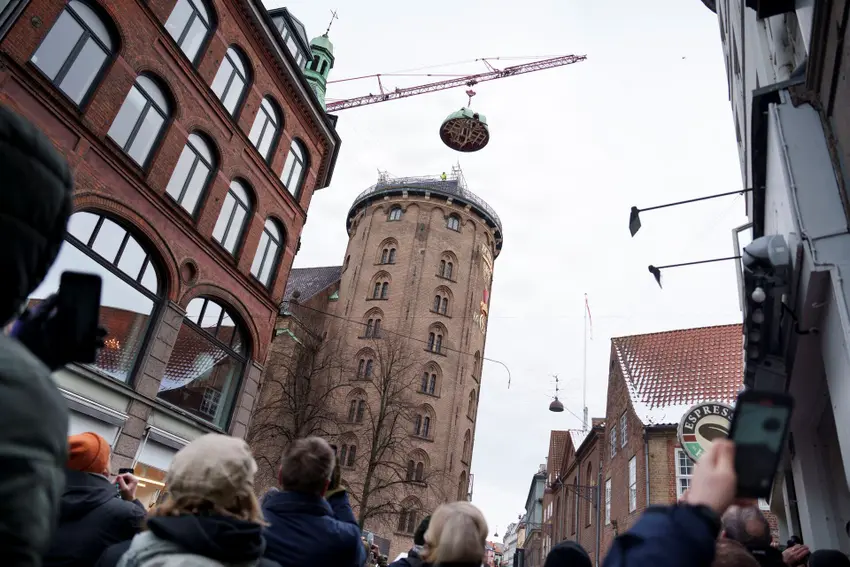
The iconic observatory dome and telescope are from 1929.
“The Round Tower is Europe's oldest functioning observatory, and it’s poetic that its re-inauguration will take place during such an astronomical event,” said Jeanette Bursche, the Round Tower’s director.
Although there are two to five solar eclipses a year anywhere on earth, and full solar eclipses every 18 months, the narrow shadow path cast by the moon, leading to an eclipse, tends to miss Denmark entirely. The solar eclipse on August 12th is therefore a big astronomical event. A more visible solar eclipse seen from Denmark will not occur until the year 2039.
Recently, the three-ton observatory dome was hoisted back onto the tower after a restoration which was completed after it was discovered in 2023 that the famous copper roof had a leak.
This extensive piece of work happened exactly 97 years after the dome was first hoisted onto the Round Tower in 1929. Back then, the dome was installed by hand.
The restorations cost 6 million kroner, and were financed from the Round Tower's own funds.
The Round Tower is particularly known for its spiral slope, which leads you almost all the way to the viewing point, 42 metres above the city. When the Round Tower was originally built, a slope was chosen rather than stairs, to allow for horses and their carriages to be drawn almost all the way up to the observatory.
The Observatory reopens for its usual sky watching in October, when the winter season starts, and it is deemed dark enough to observe stars and planets over Copenhagen.
With reporting from Ritzau
Comments